
Table of Contents
- What Actually Happens When You Pull Into a Corvette Meetup
- Corvette Meetup Activities: Cruises, Car Shows, and Track Days
- First Car Meetup Tips: How to Prepare for Your First Visit
- Car Meetup Etiquette: How to Fit In Without Trying Too Hard
- What to Bring to a Car Show or Meetup (and What to Leave Home)
- Finding a Local Club and Deciding Whether to Join
- Conclusion: The Corvette Community Is Waiting
- Frequently Asked Questions
Last Updated: October 15, 2026
What Actually Happens When You Pull Into a Corvette Meetup
Picture a sunny parking lot lined with Corvettes in every color. Owners stand in small groups, some pointing at an engine bay while others nod along.
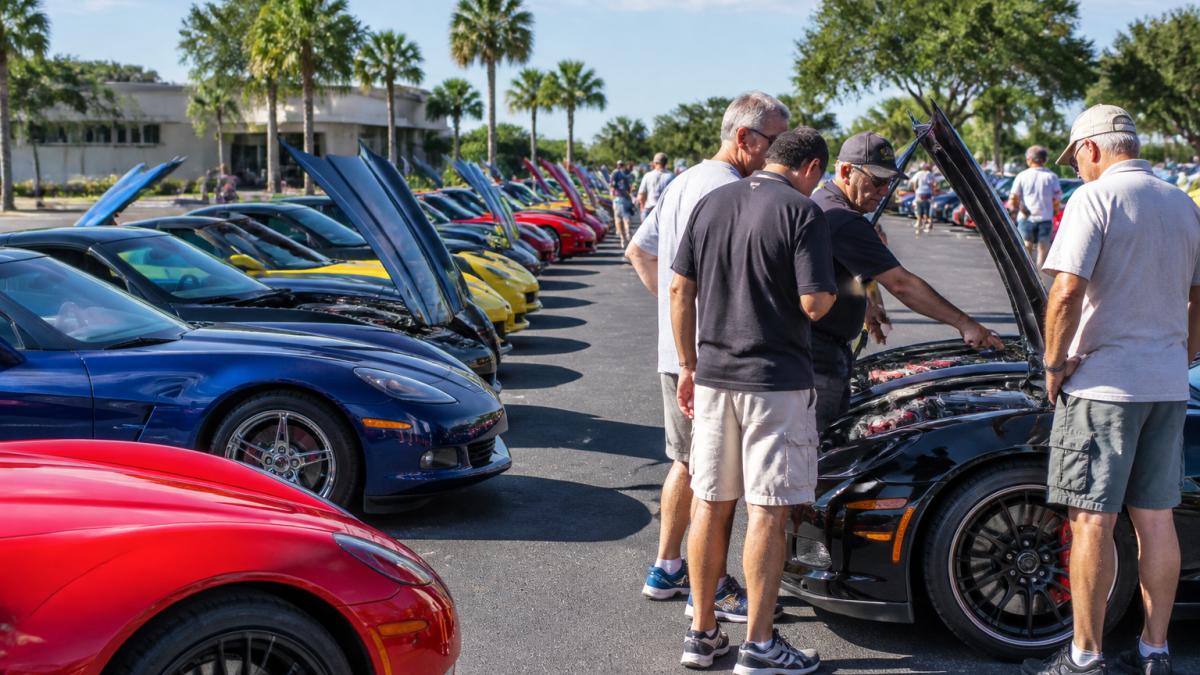
That is the reality of most corvette meetups. These corvette meetups are low-key, welcoming gatherings built around one shared interest: America’s sports car.
The first ten minutes are the hardest. You park, you get out, and you wonder if anyone will talk to you. Then someone walks over and asks about your car.
Most meetups follow a simple rhythm:
- Arrival and parking (15-30 minutes)
- Casual talk while people browse the cars
- A short club announcement or welcome for new faces
- A cruise, a meal, or both
Corvette Meetup Activities: Cruises, Car Shows, and Track Days
Corvette meetup activities range from a two-hour parking-lot gathering to a full track weekend, and the biggest mistake a newcomer makes is treating them as interchangeable. They are not. Each format carries a different atmosphere, cost, time commitment, and driving demand. Here is how to tell them apart before you commit.
Cars-and-Coffee and Informal Parking-Lot Meets
The lowest-commitment format. You show up, park, talk, and leave whenever you want. No registration, no fee, no schedule. These usually run two to three hours on a weekend morning. This is the right first event if you are unsure whether you will enjoy the scene, because you can leave after twenty minutes with no awkwardness.
Club Meetings
A monthly club meeting is a business-and-social hybrid. Expect a short agenda: upcoming events, treasury updates, charity planning, then open socializing. Meetings typically run 60 to 90 minutes indoors. They are the easiest place to meet people without engine noise competing with conversation, and they are where you learn what the club actually does before you pay dues.
Group Cruises and Road Trips
A group cruise is a convoy of Corvettes driving a planned route together. These are usually the most popular events. A caravan of twenty Corvettes on a coastal road draws attention, and that is part of the fun.
Routes often run 60 to 150 miles with a lunch stop in the middle. You do not need a modified car. A clean, road-ready Corvette is enough.
Car Shows, Vehicle Displays, and Charity Events
Car shows put your car on display for judges and the public. Some are judged, some are just for show. Charity events combine both, with entry fees going to a local cause. Expect to see different Corvette generations side by side, from C1 classics to the newest models, and expect to be stationary for most of the day. A judged show can run four to six hours, and you are usually expected to stay with your car until awards are announced.
At judged shows, clean the areas most owners forget: door jambs, wheel wells, and the engine bay. Judges notice them, and they are where casual entries lose points.
Track Days and Speed Events
Track days are the highest-commitment format and the one most first-timers should watch before they enter. These are held at closed courses, not public roads, and they require a technical inspection, a helmet, and often a novice classroom session before you are allowed on track. Costs are higher than any other event type because you are paying for track time, insurance, and sometimes instruction. If you have never driven on a track, attend one as a spectator first.
How to Choose Your First Event
Match the event to your comfort level, not to what sounds most exciting:
- Want to test the waters? Go to a cars-and-coffee meet.
- Want to meet people and learn how the club works? Attend a monthly meeting.
- Want to drive with others? Join a cruise, but only after you have met a few members.
- Want to show your car? Enter a non-judged display before a judged show.
- Want to push the car? Spectate a track day before you register for one.
A common pattern among new owners is to jump straight into a big judged show or a track day, get overwhelmed, and never come back. Start small, learn the rhythm, and work up.
First Car Meetup Tips: How to Prepare for Your First Visit
First car meetup tips come down to three things: show up, be friendly, and do not overthink it. Nobody expects you to know everyone on day one.
A few practical steps help:
- Arrive within the first 30 minutes so you catch the welcome
- Park where an organizer points you, not wherever looks best
- Bring a folding chair if the event runs long
- Charge your phone for photos and contact swaps
- Introduce yourself to at least two people
The biggest mistake new attendees make is standing by their car waiting for someone to approach. Walk over and say hello.
According to event safety guidance from the National Highway Traffic Safety Administration, staying alert and sober behind the wheel matters at any group drive. That applies double on a cruise.
Car Meetup Etiquette: How to Fit In Without Trying Too Hard
Car meetup etiquette is simple: respect the cars, respect the people, and keep the peace. Most of it is common sense, but a few unwritten rules trip up newcomers, and a few more are about safety rather than manners.
Respecting the Cars
- Never touch another person’s car without asking. Paint and trim scratch easily, and a fingerprint on a freshly detailed hood is a real annoyance.
- Do not lean on cars, set drinks on fenders, or let children climb on them.
- Do not open doors, hoods, or trunks on someone else’s car, even to look inside.
- Keep bicycles, strollers, and bags clear of the display line.
Photography Boundaries
Photography is welcome at almost every meet, but the boundaries matter:
- Ask before taking close-up photos of someone’s interior or engine bay.
- Do not photograph license plates if you plan to post the image publicly.
- Do not block traffic or stand in the driving lane to get a shot.
- If someone asks you not to photograph their car, put the camera down without arguing.
Sound and Behavior
- Do not rev your engine in the parking lot. It is the single fastest way to get a meet shut down by the property owner.
- Keep music at a reasonable volume, and turn it off when the group is talking.
- Leave the lot quietly when you go. A slow, calm exit keeps the venue welcoming to the club next month.
Convoy and Cruise Safety
Etiquette on a cruise is different from etiquette in a parking lot, because now you are moving.
- Hold your position in the line. Do not pass other Corvettes to move up.
- Leave two to three car lengths between you and the car ahead so the group does not stack up at lights.
- Use headlights so the convoy stays visible to other traffic.
- If you lose the group, do not speed to catch up. Pull over, check your phone or radio, and rejoin at the next planned stop.
- Never drive impaired. According to impaired driving guidance from the National Highway Traffic Safety Administration, alcohol and driving do not mix, and that applies to a two-hour cruise just as much as a solo drive home.
If an organizer tells you to slow down or close a gap, do it without debate. Cruise leaders are managing a group of cars on public roads, and their instructions are about safety, not ego.
Test-Drive and Ride Boundaries
Owners sometimes offer rides, and occasionally a drive. If you are offered a ride, accept or decline politely and wear the seatbelt. If you are offered the wheel of someone else’s Corvette, treat it as a serious trust.
The no-pressure environment is the point. These gatherings exist so owners can relax, not compete. If you treat every car like it belongs to a friend, you will fit in fine.
What to Bring to a Car Show or Meetup (and What to Leave Home)
What to bring to a car show depends on the event length and weather. A two-hour parking-lot meetup needs far less than a full show day.
Bring these:
- Water and a snack
- Sunscreen and a hat
- A folding chair
- A microfiber cloth for quick touch-ups
- Cash for entry fees or raffles
Leave these at home:
- Pets, unless the event allows them
- Loud speakers
- Anything that blocks other cars from view
Most clubs post an event schedule ahead of time, so check it before you pack. If the event includes a cruise, fill your tank beforehand so the group does not wait on you.
| Item | Why It Helps | Skip If |
|---|---|---|
| Folding chair | Long shows mean lots of standing | Event is under 2 hours |
| Microfiber cloth | Quick dust wipe before judging | Car is not on display |
| Cash | Entry fees, raffles, food vendors | Event is free and prepaid |
| Sunscreen | Most lots have no shade | Indoor venue |
Finding a Local Club and Deciding Whether to Join
Finding a local club starts with one visit. Attend a meetup as a guest, talk to members, and see how the group treats newcomers before you commit.
A few questions to ask yourself:
- Did members introduce themselves?
- Was there a clear schedule of upcoming events?
- Did the group feel welcoming or cliquey?
- Do events happen near you, or all in one area?
Club membership usually comes with a yearly fee, and many clubs also charge small amounts for certain events or merchandise. Ask the organizers directly what dues cover and whether event fees are separate, so there are no surprises. For current details on Rocket City Corvettes, check our website.
Monthly Meetings, Event Schedules, and Member Participation
Monthly meetings are where clubs plan cruises, shows, and charity drives. They are also the easiest place to meet people without the noise of a big event.
Member participation drives everything. Clubs that rotate event locations across a region make it easier for owners who live farther out to attend. If you live on the other side of the county, ask whether the schedule moves around before you join.
Do not judge a club by one event. A single quiet meetup may just be an off week. Attend two or three before you decide.
Conclusion: The Corvette Community Is Waiting
The hardest part of your first meetup is the walk from your car to the group. After that, it is just car people talking about cars.
Rocket City Corvettes is the fastest-growing Corvette club in Brevard County, and we built it for exactly this.
Get started with Rocket City Corvettes and find the friendships and events that make Corvette ownership better.
Frequently Asked Questions
What should I bring to a Corvette meetup?
Bring a folding chair, water, sunscreen, a hat, and a microfiber cloth to wipe dust before parking. Pack a basic detail kit if you plan to display your car. Cash helps for raffles, 50/50 drawings, or charity donations. Leave pets at home unless the event explicitly welcomes them.
Can I attend a Corvette meetup if I don’t own a Corvette?
Most clubs welcome guests and prospective members, even without a Corvette. You will not be turned away for showing up in a daily driver. Some events, like track days or judged car shows, require a Corvette to participate, but regular monthly meetings, social dinners, and casual car meetups are open to enthusiasts. If you are shopping for your first Corvette, attending is one of the fastest ways to learn which generations and options fit your budget.
How long do Corvette meetups usually last?
Casual parking-lot meetups often run 1-2 hours, usually on a weekend morning. Monthly club meetings typically last 60-90 minutes and include announcements, event planning, and social time. Group cruises and road trips can fill a full day or a weekend, especially when they include a lunch stop and a car show. Holiday parties and dinner events usually run 2-4 hours. Check the event schedule in advance so you can plan your arrival and departure.
What is proper etiquette at a car meetup?
Ask before touching anyone’s car, keep your hands and belt buckles away from paint, and never lean on a fender. Park where a volunteer directs you, arrive quietly, and avoid revving your engine in the lot. Do not block traffic lanes or exits. When you talk shop, listen as much as you talk. Keep political and personal arguments out of the group. If you bring a guest, watch your children and pets closely. Clean up your trash and leave the space better than you found it.